


Business Wire India
- IQM Radiance systems now operate as computational nodes inside HPC environments.
- The hybrid workflows are scheduled and managed alongside CPUs and GPUs by the same workload manager already operational in the world’s top supercomputing centers.
- The new HPC Integration Service reflects the company’s production quantum model – end-users own the hardware, run it on their infrastructure, and operate it under their control.
IQM Quantum Computers today launched HPC Integration Service, a turnkey solution that enables its IQM Radiance quantum computers to operate as a slurm node inside high-performance computing (HPC) environment.
This press release features multimedia. View the full release here: https://www.businesswire.com/news/home/20260512187465/en/
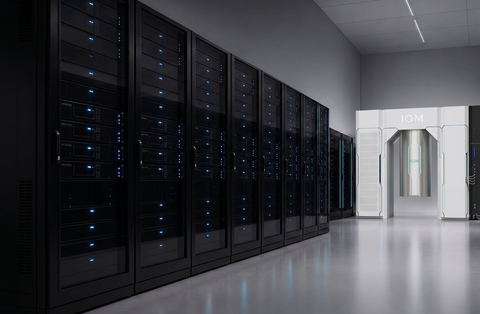
IQM Radiance quantum computer (right) co-located with classical HPC infrastructure (left) in a data center environment.
Using this widely adopted HPC workflow, IQM aims at accelerating adoption of hybrid quantum-classical computing across enterprises and research institutions. Slurm is the open-source workload manager used by most of the world’s leading supercomputing centers for its scalability and flexibility.
The integration service makes quantum a scheduled resource alongside central processing units (CPUs) and graphics processing units (GPUs), removing the integration work that has slowed adoption.
In addition, the service is built on IQM´s Quantum Device Management Interface (QDMI), an open-source standardization layer that simplifies the vendor-specific software interfaces that have fragmented quantum integration to date.
The new HPC Integration Service has been demonstrated in a paper on arXiv co-authored with researchers at the Munich Quantum Software Company (MQSC) and is already running in production at the Leibniz Supercomputing Centre (LRZ) in Germany, where IQM has installed four quantum computers.
“We have been hearing about an integration bottleneck from HPC customers for years,” said Jan Goetz, CEO and Co-founder of IQM Quantum Computers. “HPC integration is important work and by removing the complexity, end-users can focus on running quantum workloads instead on spending time on programming new routines. This is what production quantum means to us. Quantum you own, operate, and build value on. Real infrastructure inside real environments, doing real work.”
Quantum computers have been deployed at customer sites for several years, but once installed, most of them have operated next to the HPC software stack rather than inside them. Every deployment required custom integration work that the next deployment could not reuse. The new HPC Integration Service unifies the software stack, allowing customers to focus on use-case execution.
The HPC Integration Service closes the gap by enabling users to submit quantum jobs through the same interface and scheduler they use for CPUs and GPUs. Researchers can run benchmarks across systems using tools they already know, while system teams keep their existing operating model.
“Our vision has always been the seamless integration of quantum computing into existing HPC environments, where users can run applications without concern for the underlying hardware. The Quantum Device Management Interface, as part of the Munich Quantum Software Stack, is a key step toward this goal. We are proud to see innovations developed within Munich Quantum Valley now being adopted by IQM as a key player in the quantum world to enable hybrid quantum-HPC workloads in real environments,” said Prof Dieter Kranzlmüller, Chairman of the Board of Directors, Leibniz Supercomputing Centre.
IQM has on-premises systems operating at four of the world’s top 10 supercomputing centres and has sold more quantum systems than any other manufacturer. The company’s ambition is to be the foundation that customers build their quantum capability on.
In February, IQM announced plans to go public through a business combination with Real Asset Acquisition Corp. (Nasdaq: RAAQ). Following the close of the transaction, the company is expected to list on a major U.S. stock exchange, with a dual listing on the Helsinki Stock Exchange under consideration.
About IQM Quantum Computers:
IQM Quantum Computers is the global leader in superconducting quantum computers, delivering full-stack quantum systems and cloud platform access to research institutions, universities, high-performance computing centers, and national laboratories worldwide. IQM's on-premises deployment model gives customers direct ownership and control of their quantum infrastructure. Founded in 2018, headquartered in Finland, it has over 350 employees. IQM operates across Europe, Asia, and North America. IQM has announced its plans to become the first publicly listed European quantum company on a major U.S. stock exchange by merging with Real Asset Acquisition Corp. (Nasdaq: RAAQ); with a dual listing on the Helsinki Stock Exchange also under consideration.
View source version on businesswire.com: https://www.businesswire.com/news/home/20260512187465/en/

Disclaimer: The above press release comes to you under an arrangement with Business Wire India. Publication takes no editorial responsibility for the same.